
Health
Edema: Causes, Symptoms, Treatment & When to Worry

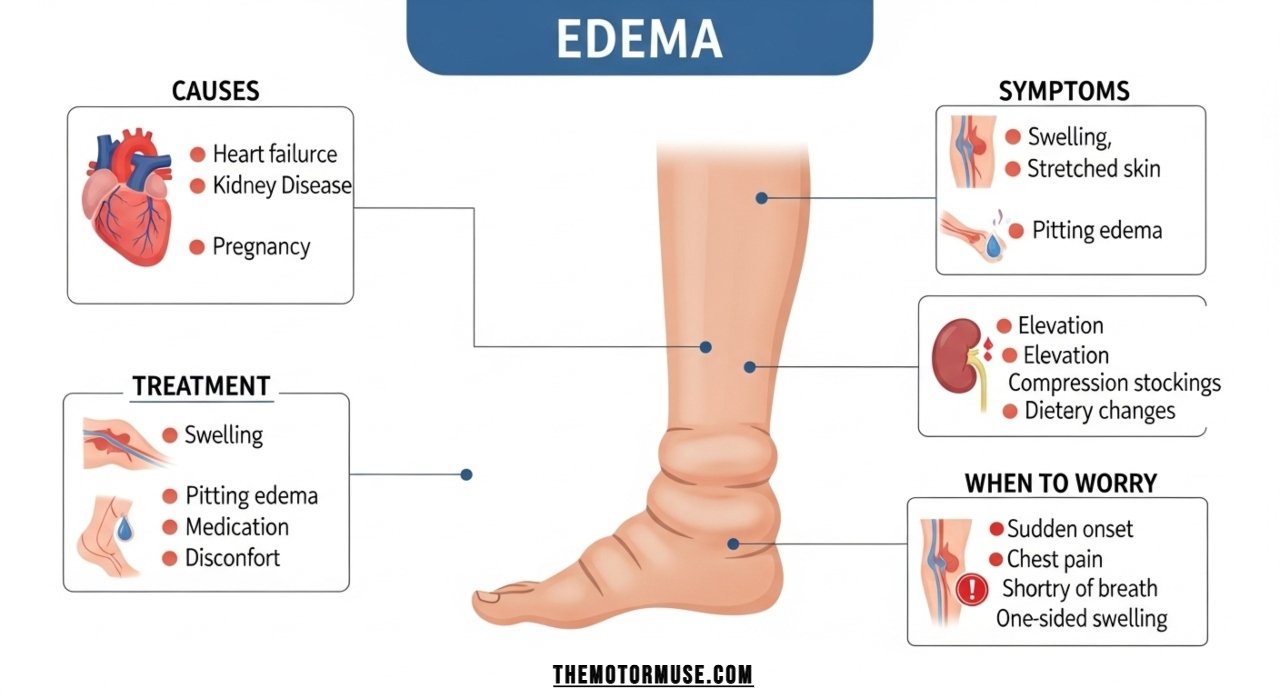
Edema is swelling caused by excess fluid buildup in body tissues. It commonly affects the hands, feet, ankles, and legs, but can occur anywhere. Causes range from prolonged sitting and high salt intake to heart, kidney, or liver conditions. Treatment depends on the underlying cause.
Edema is swelling caused by excess fluid trapped in the body’s tissues. It most commonly affects the legs, ankles, feet, and hands, but it can occur anywhere — including the lungs or brain, where it can become life-threatening.
Fluid normally circulates through blood vessels and lymphatic channels. When that balance is disrupted, fluid leaks into surrounding tissues and causes visible swelling.
Mild cases are common and temporary. Severe or persistent edema often signals an underlying medical condition that requires evaluation.
Why Edema Happens
Your body constantly regulates fluid using blood pressure, kidney function, hormones, and the lymphatic system. Edema develops when:
- Blood vessels leak excess fluid
- Pressure inside vessels increases
- Protein levels in blood drop
- Lymphatic drainage is blocked
- Sodium and water retention increases
The kidneys play a major role. When they retain too much sodium, water follows — leading to swelling.
Read: Deficiency: Causes, Symptoms, and Solutions
Common Causes of Edema
Edema can range from harmless to serious. Causes include:
1. Prolonged Sitting or Standing
Long flights or desk work may cause temporary ankle swelling.
2. High Sodium Intake
Excess salt increases fluid retention.
3. Pregnancy
Hormonal shifts and pressure from the uterus slow circulation.
4. Medications
Certain drugs can cause swelling, including:
- Calcium channel blockers
- NSAIDs
- Corticosteroids
- Hormonal therapy
5. Heart Conditions
In congestive heart failure, the heart cannot pump effectively, causing fluid buildup in the legs and lungs.
6. Kidney Disease
Damaged kidneys fail to remove excess fluid.
7. Liver Disease
Conditions like cirrhosis reduce protein production, leading to fluid accumulation in the abdomen (ascites).
8. Lymphatic Blockage
Lymphedema occurs when lymph vessels are damaged or obstructed.
9. Infections or Inflammation
Localized swelling can result from injury or infection.
Types of Edema
Not all swelling is the same. The type helps determine severity.
Peripheral Edema
Affects legs, ankles, feet, and sometimes arms. Most common form.
Pulmonary Edema
Fluid in the lungs. Often related to heart problems. Symptoms include:
- Shortness of breath
- Rapid breathing
- Coughing frothy sputum
This is a medical emergency.
Cerebral Edema
Swelling in the brain due to injury, stroke, or infection. Symptoms may include:
- Severe headache
- Confusion
- Seizures
Immediate emergency care is required.
Macular Edema
Affects the retina and vision. Often seen in diabetes.
Lymphedema
Caused by lymphatic system damage, sometimes after cancer surgery.
Pitting vs Non-Pitting Edema
| Type | Description |
| Pitting | Indentation remains after pressing skin |
| Non-pitting | Skin springs back immediately |
Pitting often relates to fluid retention. Non-pitting may suggest thyroid or lymphatic issues.
Symptoms of Edema
Symptoms vary by location but commonly include:
- Swelling or puffiness
- Tight, shiny skin
- Reduced flexibility in joints
- Weight gain from fluid retention
- Skin indentation after pressure (pitting)
In serious cases:
- Chest pain
- Severe breathing difficulty
- Confusion
Seek urgent care if these occur.
When Is Edema Dangerous?
You should seek immediate medical attention if swelling is accompanied by:
- Sudden shortness of breath
- Chest pain
- Coughing pink foam
- Severe headache or neurological symptoms
- One-sided leg swelling with pain (possible deep vein thrombosis)
Persistent swelling lasting more than a few days should also be evaluated.
How Doctors Diagnose Edema
Diagnosis involves identifying the underlying cause.
Medical History
- Recent travel
- Medication use
- Heart or kidney disease
- Pregnancy
Physical Exam
Doctors check:
- Location of swelling
- Pitting response
- Skin temperature
Diagnostic Tests May Include:
- Blood tests (kidney, liver function)
- Urine analysis
- Chest X-ray
- Echocardiogram
- Ultrasound for blood clots
- MRI or CT scan (for cerebral cases)
The goal is not just to reduce swelling, but to treat the root cause.
Treatment Options for Edema
Treatment depends entirely on the underlying condition.
1. Lifestyle Adjustments (Mild Cases)
- Reduce sodium intake
- Elevate legs above heart level
- Wear compression stockings
- Increase physical movement
- Maintain healthy weight
2. Medications
Diuretics (“Water Pills”)
Commonly prescribed to remove excess fluid. Examples include:
- Furosemide
- Hydrochlorothiazide
These must be monitored carefully due to electrolyte imbalance risk.
Adjusting Offending Medications
Sometimes simply changing a prescription resolves swelling.
3. Treating Underlying Disease
- Heart failure → cardiac management
- Kidney disease → nephrology care
- Liver disease → hepatology treatment
- Thyroid imbalance → hormone therapy
4. Emergency Care
Pulmonary or cerebral edema requires hospitalization and possibly oxygen therapy, IV medication, or mechanical support.
How to Reduce Swelling at Home
If your swelling is mild and not related to a serious condition:
- Elevate affected limbs for 30 minutes, 3–4 times daily
- Reduce salt intake
- Stay hydrated
- Walk or stretch every hour during travel
- Use compression garments
Do not self-medicate with diuretics without medical advice.
Edema During Pregnancy
Mild swelling is common, especially in the third trimester.
However, sudden swelling with:
- High blood pressure
- Headache
- Vision changes
May indicate preeclampsia, which requires urgent medical evaluation.
Edema in Older Adults
Older adults are more prone to swelling due to:
- Reduced circulation
- Medication side effects
- Chronic disease
Regular monitoring is important, especially for heart or kidney conditions.
Can Diet Affect Edema?
Yes.
Foods That May Worsen Swelling:
- Processed foods
- Fast food
- Canned soups
- High-sodium snacks
Foods That Support Fluid Balance:
- Leafy greens
- Bananas (potassium-rich)
- Watermelon
- Cucumbers
Proper hydration is essential. Paradoxically, dehydration can cause fluid retention.
Is Edema the Same as Weight Gain?
Not necessarily.
Rapid weight gain over days may indicate fluid retention rather than fat gain. Doctors sometimes track daily weight in heart failure patients to monitor fluid changes.
Preventing Edema
Prevention depends on risk factors.
General Prevention Tips:
- Limit salt
- Stay active
- Manage chronic conditions
- Follow medication instructions
- Maintain regular checkups
Travelers should move frequently during long flights to reduce risk of swelling and blood clots.
Pros and Cons of Diuretic Therapy
| Pros | Cons |
| Reduces swelling quickly | Risk of dehydration |
| Improves breathing in pulmonary cases | Electrolyte imbalance |
| Helps heart failure patients | Frequent urination |
Medical supervision is essential.
When to See a Doctor
Make an appointment if:
- Swelling is persistent
- Only one leg is affected
- Skin becomes red or painful
- Swelling worsens suddenly
Early evaluation prevents complications.
Frequently Asked Questions
1. Is edema serious?
It can be mild and temporary, but in cases involving the lungs or brain, it is life-threatening.
2. What is the fastest way to reduce swelling?
Elevating limbs and reducing salt intake help mild cases. Severe cases require medical treatment.
3. Can dehydration cause edema?
Yes. When dehydrated, the body may retain fluid as a protective mechanism.
4. Does edema go away on its own?
Temporary swelling may resolve. Chronic edema usually requires medical intervention.
5. Is edema a sign of heart failure?
It can be. Leg swelling and shortness of breath are common signs of congestive heart failure.
6. Why is only one leg swollen?
This may indicate a blood clot or localized blockage and requires urgent evaluation.
7. Can exercise reduce edema?
Gentle movement improves circulation and helps prevent fluid buildup.
8. Are compression stockings effective?
Yes, especially for peripheral edema caused by poor circulation.
Conclusion
Edema is not a disease itself — it’s a symptom. While mild swelling is often harmless, persistent or severe edema may signal serious conditions involving the heart, kidneys, liver, or lungs.
The key is identifying the cause early. If swelling is sudden, painful, or associated with breathing difficulty or chest pain, seek emergency care immediately.
For ongoing swelling, consult a healthcare provider for proper diagnosis and tailored treatment. Early action protects long-term health and prevents complications.



Jeroen Dik: VAG Tuning Expert & Racing Champion

“Xaicotum: Technology, Superfood & Cultural Insights”

Jiolojia: Understanding Geology and Earth’s Rocks

Subaru WRX STI discontinued … till further notice
What could have been: The incredible experimental engines that time forgot
