
industrial and manufacture
How can precision turning help manufacturers reduce part scrap rates to below 1%

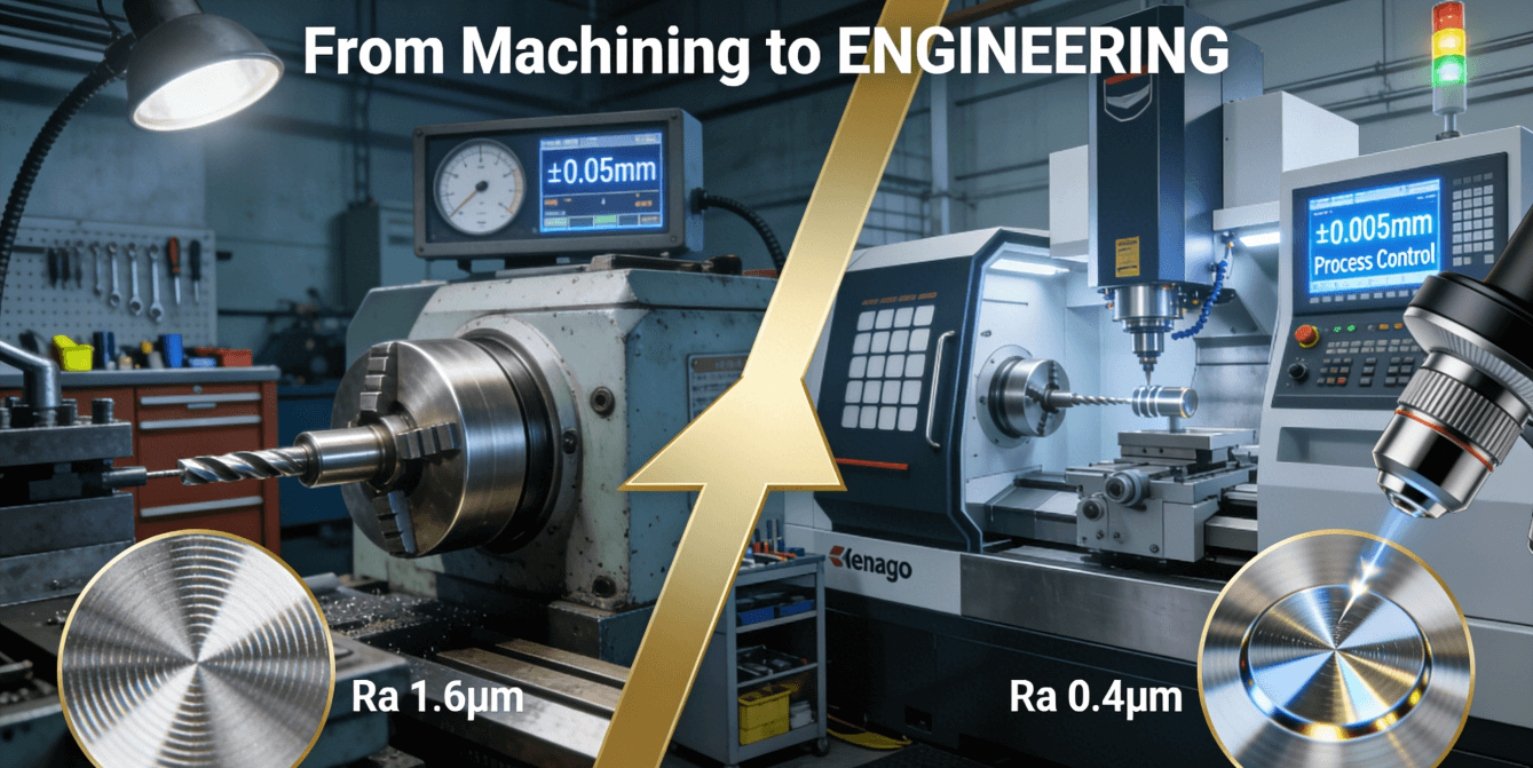
In high-end manufacturing sectors such as automotive and aerospace, the persistently high scrap rate of components, especially high-value metal parts, remains a widespread and costly pain point. Deviations as minute as a few microns in dimension or subtle surface flaws can render an entire part unusable, leading to significant waste of both valuable materials and time. The root cause often lies in the inherent instability of traditional machining processes, a lack of in-process monitoring, and an insufficiently deep understanding of the interplay between material properties and machining parameters. This injects a high degree of uncertainty into production.
This article delves into modern CNC precision turning technology, elucidating how it revolutionizes part quality through systematic control over machining stability, surface finish, and material compatibility. It provides manufacturers with a viable pathway to consistently reduce scrap rates to below 1% or even achieve zero-defect production. The following sections will dissect this precision manufacturing solution across its key dimensions.
What is True CNC Precision Turning, and How Does It Differ Essentially from Conventional Turning?
CNC precision turning is not merely machining on a CNC lathe. Its core definition revolves around “process control,” with the goal of achieving micron-level tolerances and sub-micron surface finishes. The objective is to ensure every machining action is precisely predicted and controlled, guaranteeing supreme performance and ultimate consistency for each part. This forms the cornerstone of modern Precision Manufacturing Services.
The distinction from conventional turning is fundamental, representing a leap in both philosophy and capability, as detailed in the comparison below:
| Comparison Dimension | Conventional CNC Turning | CNC Precision Turning |
| Typical Tolerance | ±0.05 mm or coarser | ±0.005 mm or better (e.g., ±0.001 mm) |
| Surface Roughness (Ra) | Typically Ra 1.6 μm and above | Can achieve Ra 0.4 μm or even below Ra 0.2 μm |
| Control Focus | Completing the geometric shape | Pursuing comprehensive control over size, form, location, and surface quality |
| Thermal Compensation | Often lacks dedicated temperature control | Equipped with machine tool thermal error compensation systems to counteract environmental and cutting heat deformation |
| Process Monitoring | Relies on manual spot-checking | Integrates in-process measurement, tool wear monitoring, and other real-time feedback systems |
| Core Objective | “To make the part” | “To make it accurate, stable, and superior” |
This leap is enabled by systematic upgrades in machine rigidity, spindle accuracy, linear motors/ball screws, high-performance CNC systems, and advanced cutting tool technology. As highlighted by the National Institute of Standards and Technology (NIST) in its overview of “Precision Engineering and Metrology,” the essence of precision manufacturing lies in measurable and repeatable process control. For a deeper dive into the specific definition, quality standards, and complete process flow of CNC precision turning parts, one can refer to this comprehensive professional guide.
Why Are Precision Turned Components the Critical Cornerstone of Industrial Automation?
The wave of industrial automation and smart manufacturing ultimately relies on the performance of countless microscopic mechanical interfaces and transmission nodes. Precision turned components, such as servo motor shafts for robotic joints, pinion shafts for precision reducers, ball screws for linear modules, and spools and pistons for hydraulic/pneumatic systems, are the core physical carriers of these nodes.
The high precision and exceptional consistency of these parts directly determine the positioning accuracy, repeatability, response speed, efficiency, and long-term mean time between failures (MTBF) of automated equipment. Within Automotive Industry Solutions, for instance, the fuel injector nozzle in a high-pressure common rail system requires micron-level clearances. Any deviation directly impacts fuel dosage and atomization, affecting engine power, fuel consumption, and emissions. Precision lead screws in aerospace actuators must maintain dimensional stability and minimal friction under extreme temperatures and loads, making them critical for flight safety.
Therefore, the advancement of Industrial Manufacturing requires not only intelligent software and control systems but also high-performance “industrial bones and muscle fibers,” represented by precision-turned parts, as physical enablers. This demands a deep fusion of process know-how and materials science, developing specialized CNC turning process parameters for different steels (e.g., free-cutting steel, high-strength alloy steel, corrosion-resistant stainless steel), as detailed in material databases like those from ASM International, where understanding “machinability” is key.
How to Achieve Significant Cost Control by Optimizing the Precision Turning Process?
Opting for precision turning does not equate to uncontrollable costs. On the contrary, through systematic process optimization, it can achieve significant cost savings over the total lifecycle of a part.
Debunking the “High Precision = High Cost” Misconception
The true cost of precision manufacturing is the sum of material, machining, inspection, scrap, and subsequent assembly/post-processing. The material waste, schedule delays, and potential brand reputation damage caused by high scrap rates are the largest hidden costs. Elevating first-pass yield to over 99% fundamentally eliminates this waste.
Process Optimization is the Key Lever for Cost Reduction
Scientific precision turning of steel parts parameters (optimal cutting speed, feed rate, depth of cut) are central to cost control. For example:
- Extending Tool Life: Optimal parameters reduce tool wear, lowering the per-part tooling cost.
- Enhancing Efficiency and Quality: Optimized parameters can increase metal removal rates while ensuring surface finish and reducing defects like work hardening, lowering scrap rates at the source.
Economic Viability in Low-Volume Customization
Modern custom CNC turning services, leveraging Flexible Manufacturing Systems (FMS) and quick-change tooling, have made low-volume, high-mix production of precision parts economically feasible. It eliminates high mold investment costs and drastically shortens the cycle from R&D to validation, providing an agile and cost-effective path for innovation and customization.
How Should Manufacturers Evaluate and Select a Reliable Precision Turning Service Provider?
Choosing the right partner is the first step in successfully implementing a precision manufacturing strategy. Evaluation should go beyond equipment lists and focus on three core dimensions.
Technical Capability and Process Depth
- Equipment and Inspection:
Assess the presence of high-rigidity, high-precision Swiss-type lathes, sliding headstock lathes, multi-axis mill-turn centers, as well as advanced inspection equipment like Coordinate Measuring Machines (CMM), roundness testers, and surface roughness testers.
- Process Knowledge Base:
A superior supplier possesses a deep materials machining database, offering proven process plans for different materials (e.g., stainless steel, titanium) and a track record of solving complex challenges like thin-wall part distortion or deep-hole drilling.
The Imperative of Quality System Certifications
Certifications are the foundational guarantee of process stability and reliability. It is essential to verify the supplier’s international quality system certifications:
IATF 16949: A mandatory entry requirement for the global automotive supply chain.AS9100D: A hard requirement for the aerospace sector.ISO 9001 & ISO 14001: Represent internationally recognized commitments to systematized quality and environmental management, respectively.
End-to-End Service and Commitment
A professional supplier should offer a full-cycle CNC precision turning solution, from Design for Manufacturability (DFM) analysis and process planning to production and final inspection. For instance, reviewing a professional service page like JS Precision’s CNC turning service page, which clearly outlines capabilities, quality commitments, and project workflows, serves as a valuable reference for assessing their professionalism.
From Prototype to Production: How Does Precision Turning Ensure Quality Consistency Throughout the Product Lifecycle?
True manufacturing capability is demonstrated by consistent quality from the first piece to the millionth. An excellent CNC Precision Turning process plan’s core value lies in its seamless scalability from prototype to mass production.Process scalability means the control logic, clamping strategy, tool paths, and inspection methods developed for the prototyping phase can be directly replicated and scaled for production lines. This ensures that trial samples and mass-produced parts are identical in performance.
A full-cycle quality control system acts as a “firewall” for consistency. This includes stringent First Article Inspection (FAI), in-process monitoring via Statistical Process Control (SPC), periodic in-process checks, and a Final Dimensional Inspection Report (FDIR) before shipment. Here, advanced inspection equipment like CMMs provide objective, quantitative data, replacing traditional reliance on manual judgment.
Ultimately, this is a data-driven closed loop. Data from every machining and inspection cycle is analyzed to feedback and optimize process parameters, predict tool life, and enable preventive maintenance. Through this mechanism of continuous improvement, CNC turning services can ensure stable, high-quality output year after year throughout a product’s lifecycle, safeguarding the long-term reputation of the client’s brand.
Conclusion
In summary, systematically reducing component scrap rates to below 1% is an achievable target. The key lies in shifting from a “machining” mindset to a “manufacturing engineering” mindset, by embracing advanced processes like CNC precision turning that feature full-process control capabilities. This involves the systematic management of equipment, materials, processes, and quality, representing an essential path for high-end manufacturing to enhance core competitiveness and achieve cost reduction and efficiency gains.
If you are grappling with yield issues for critical components or planning a new project with stringent precision requirements, it is time to re-evaluate your manufacturing process. Consult a professional precision manufacturing partner immediately to obtain a feasibility analysis and process optimization plan tailored to your parts.
Author Bio
This article was contributed by an engineer with over 15 years of experience in the precision manufacturing field. He has in-depth expertise in CNC precision machining processes, materials science, and cross-industry applications (e.g., automotive, aerospace) and has assisted numerous manufacturers in successfully resolving mass production quality control challenges for complex parts. His insights and practical achievements can be further explored in the technical literature of the industry-leading precision manufacturing service provider, JS Precision, which holds authoritative certifications including ISO 9001, IATF 16949, AS9100D, and ISO 14001.
FAQ Section
Q1: What tolerance levels can typically be achieved with CNC precision turning?
A: For typical shaft and sleeve-type parts, diameter tolerance can be consistently controlled within ±0.005 mm. With optimal process and material combinations, some critical dimensions can achieve ±0.001 mm or even higher precision, depending on part geometry and material properties.
Q2: Is the cost of low-volume custom precision turning prohibitively high?
A: Not necessarily. Modern flexible manufacturing systems have reduced setup changeover costs for low volumes. With rational process design and material selection, the unit price for low-volume precision parts may be higher than for high-volume runs, but it avoids mold investment and shortens time-to-market, potentially offering a better total cost of ownership.
Q3: How can consistency be ensured for every precision-turned part in mass production?
A: This relies on Statistical Process Control (SPC), automatic tool wear compensation, regular equipment calibration, and standardized work procedures. By monitoring key dimensions in real-time and making adjustments before trends deviate from control limits, high consistency between batches can be achieved.
Q4: What is the biggest challenge in precision turning of stainless steel materials?
A: The main challenges include “built-up edge” due to its toughness, work hardening tendency, and heat dissipation issues. Solutions involve selecting specific coated tools (e.g., AlTiN), optimizing cutting parameters (like higher cutting speeds), and employing strategies like high-pressure coolant or oil mist to improve chip breaking and heat dissipation.
Q5: Generally, how long does it take from submitting drawings to receiving a precision-turned part prototype?
A: For parts of moderate complexity, a professional service provider can deliver prototypes within 3-7 business days after manufacturability confirmation. The exact timeline depends on material availability, process complexity, and current production scheduling, with expedited services available to further shorten lead times.



Everything You Need to Know About Drain Cleaning

Hydro Jetting Safety Tips and Techniques Used by Experienced Plumbing Professionals

The Complete Guide to Professional Packing for a Safe and Stress-Free Move
