
Cars
Mild Hybrid: How It Works & Key Benefits

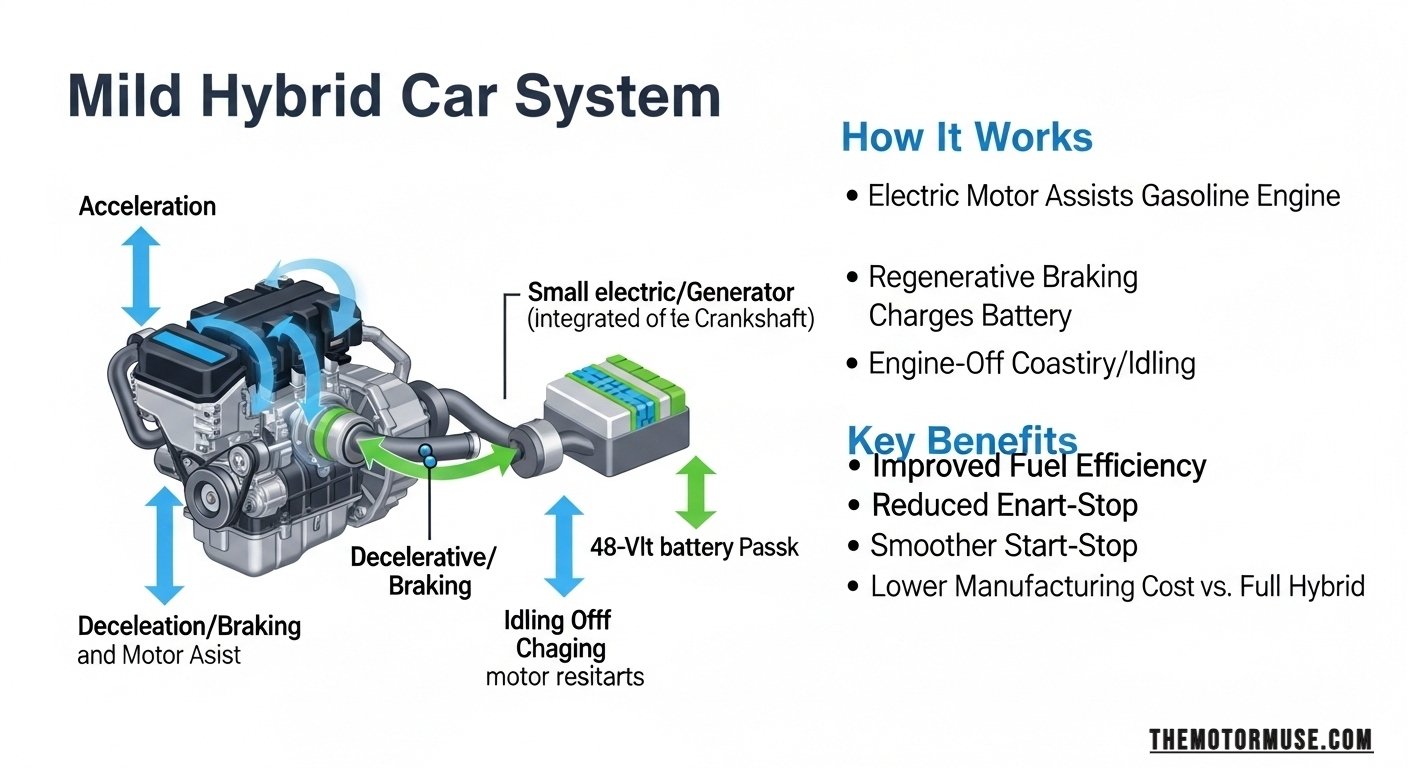
A mild hybrid is a vehicle that uses a small electric motor and 48-volt battery to support a petrol or diesel engine. It improves fuel efficiency and reduces emissions but cannot run on electric power alone.
Are you intrigued by the idea of a vehicle that marries traditional power with cutting-edge technology? Enter the world of mild hybrids—a game-changing option for eco-conscious drivers. These innovative vehicles blend a gasoline engine with an electric motor, delivering improved fuel efficiency without sacrificing performance. Whether you’re navigating city streets or taking long road trips, mild hybrids offer a smooth and efficient ride. With growing popularity and advancements in automotive tech, understanding what makes these cars tick is essential for anyone looking to make greener choices on the road. Let’s dive into how mild hybrid vehicles work and explore their numerous benefits!
Overview of Mild Hybrid Vehicles
Mild hybrid vehicles represent an exciting evolution in automotive technology. They combine a traditional internal combustion engine with a smaller electric motor, offering drivers enhanced efficiency without the complexities of full hybrids. Unlike their fully electric counterparts, mild hybrids don’t rely solely on battery power; instead, they use it to assist the gasoline engine during acceleration.
This unique setup allows for smoother transitions between power sources and helps reduce fuel consumption. The electric motor can provide additional torque when needed, improving overall performance while maintaining lower emissions. In many cases, these systems enable regenerative braking as well, capturing energy that would otherwise be wasted during braking.
Most mild hybrids still require gasoline to function but integrate advanced technology to optimize fuel economy. Many automakers are integrating these systems into popular models across various segments—from compact cars to larger SUVs—making it easier for consumers to find one that fits their lifestyle.
With increasing concerns about environmental impact and rising fuel costs, mild hybrids present a balanced solution for those seeking efficiency without compromising driving enjoyment.
Read:Cison Engine: The Future of Smart Digital Performance
Key Differences Between Mild Hybrid and Full Hybrid Cars
Mild hybrid and full hybrid cars both use electric power to improve efficiency, but they operate quite differently. Mild hybrids feature a smaller battery and motor compared to their full counterparts. Their electric system helps the gasoline engine during acceleration but cannot drive the car independently.
Full hybrids, on the other hand, can run solely on electricity for short distances. This capability allows them to achieve better fuel economy in urban settings where stop-and-go traffic is common. Mild hybrids rely more on their internal combustion engines while still benefitting from regenerative braking.
Another key difference lies in complexity and cost. Full hybrid systems are more intricate with larger batteries, translating into higher production costs. Mild hybrids usually come at a lower price point without sacrificing too much efficiency or performance.
Maintenance tends to be simpler for mild hybrids due to fewer components involved in their operation. This simplicity can appeal to those seeking an efficient yet uncomplicated driving experience.
Examples of Mild Hybrid Vehicles in the Market
Mild hybrid vehicles are becoming increasingly popular, offering a blend of efficiency and performance. Many manufacturers are stepping up to provide innovative options for consumers looking to reduce their carbon footprint without sacrificing driving experience.
One notable example is the Honda CR-V Hybrid, which combines a gasoline engine with an electric motor for seamless power delivery. This vehicle enhances fuel efficiency while maintaining the versatility that families appreciate.
Another contender in this space is the Ford F-150 PowerBoost Hybrid. It retains the rugged capability of its full-size truck lineup but adds mild hybrid technology to improve fuel economy and torque, making it ideal for both work and play.
The BMW 330e also stands out as a sporty option among mild hybrids. With its sleek design and impressive handling, it seamlessly integrates electric assistance into daily commutes or weekend drives, showcasing how performance can coexist with sustainability in today’s automotive landscape.
Benefits of Driving a Mild Hybrid
Driving a mild hybrid vehicle offers several distinct advantages that can enhance your daily driving experience. One of the primary benefits is improved fuel efficiency. Mild hybrids utilize an electric motor to assist the gasoline engine, which helps reduce overall fuel consumption while providing a smoother ride.
Another significant perk is lower emissions. By using both an electric motor and a traditional engine, these vehicles produce fewer harmful pollutants compared to conventional cars. This makes them more environmentally friendly, appealing to eco-conscious drivers looking for sustainable options.
Mild hybrids also deliver enhanced performance. The electric motor provides extra torque during acceleration, making it easier to navigate highways or merge into traffic seamlessly without compromising power.
Many mild hybrid models come equipped with advanced technology features. These innovations not only improve safety but also make driving more enjoyable with infotainment systems and connectivity options that keep you engaged on the road.
Test-Driving a Mild Hybrid Vehicle
When it comes to test-driving a mild hybrid vehicle, the experience can be quite eye-opening. Right from the moment you start the engine, you notice a difference. The transition between electric and gas power is seamless, providing a smooth driving experience without any jerks or disruptions.
As you accelerate, you’ll feel that extra boost of torque provided by the electric motor. This feature enhances responsiveness, making city driving and highway merging effortless. You might even find yourself enjoying that little extra push during those tricky overtaking maneuvers.
In addition to performance, pay attention to how quiet it is inside the cabin. Mild hybrids tend to operate silently at low speeds when running on electric alone, which creates an enjoyable ambiance for passengers.
Don’t forget to explore various driving modes if available; many mild hybrids offer options tailored for efficiency or sportiness. A quick spin around town will help you appreciate what these vehicles have to offer in real-world conditions.
Case Study: Mild Hybrid Vehicles by Mercedes-Benz
Mercedes-Benz has embraced the mild hybrid technology, incorporating it into several models across their lineup. The brand’s EQ Boost system is a prime example of how this innovative approach enhances performance and efficiency. By integrating a small electric motor with an internal combustion engine, Mercedes-Benz vehicles can provide an extra boost during acceleration without compromising on driving pleasure.
One standout model is the E-Class sedan. It features mild hybrid systems that seamlessly transition between the petrol engine and electric support, optimizing fuel consumption in real-time. This ensures smoother starts and improved responsiveness while also reducing emissions.
Another impressive offering is the GLE SUV. With its mild hybrid setup, drivers experience enhanced torque for off-road adventures while enjoying better fuel efficiency on long trips. This blend of luxury and sustainability demonstrates Mercedes-Benz’s commitment to modern automotive solutions.
These advancements show how traditional luxury brands are adapting to eco-conscious trends without sacrificing performance or comfort, paving the way for future innovations in mobility.
The Future of Mild Hybrids: Trends and Expectations
The automotive industry is rapidly evolving, with mild hybrids gaining traction as a popular choice among environmentally conscious drivers. As manufacturers invest in technology and infrastructure, we can expect further innovations that will enhance the efficiency of these vehicles.
With advancements in battery technology and regenerative braking systems, future mild hybrids may offer improved performance while reducing emissions even further. Additionally, as more consumers prioritize sustainability without sacrificing convenience or power, demand for mild hybrid vehicles is likely to increase.
Governments around the world are also incentivizing eco-friendly technologies through subsidies and tax breaks, encouraging both automakers and buyers to shift towards greener alternatives. This trend could lead to a broader array of models available on the market catering to various preferences.
As consumers become more educated about their choices regarding fuel economy and environmental impact, it’s clear that mild hybrids will play an essential role in shaping the future landscape of personal transportation. With ongoing developments promising enhanced features and better performance metrics, it’s an exciting time for those considering making the switch to this innovative vehicle type.












Jeroen Dik: VAG Tuning Expert & Racing Champion

“Xaicotum: Technology, Superfood & Cultural Insights”

Jiolojia: Understanding Geology and Earth’s Rocks

Subaru WRX STI discontinued … till further notice
What could have been: The incredible experimental engines that time forgot
