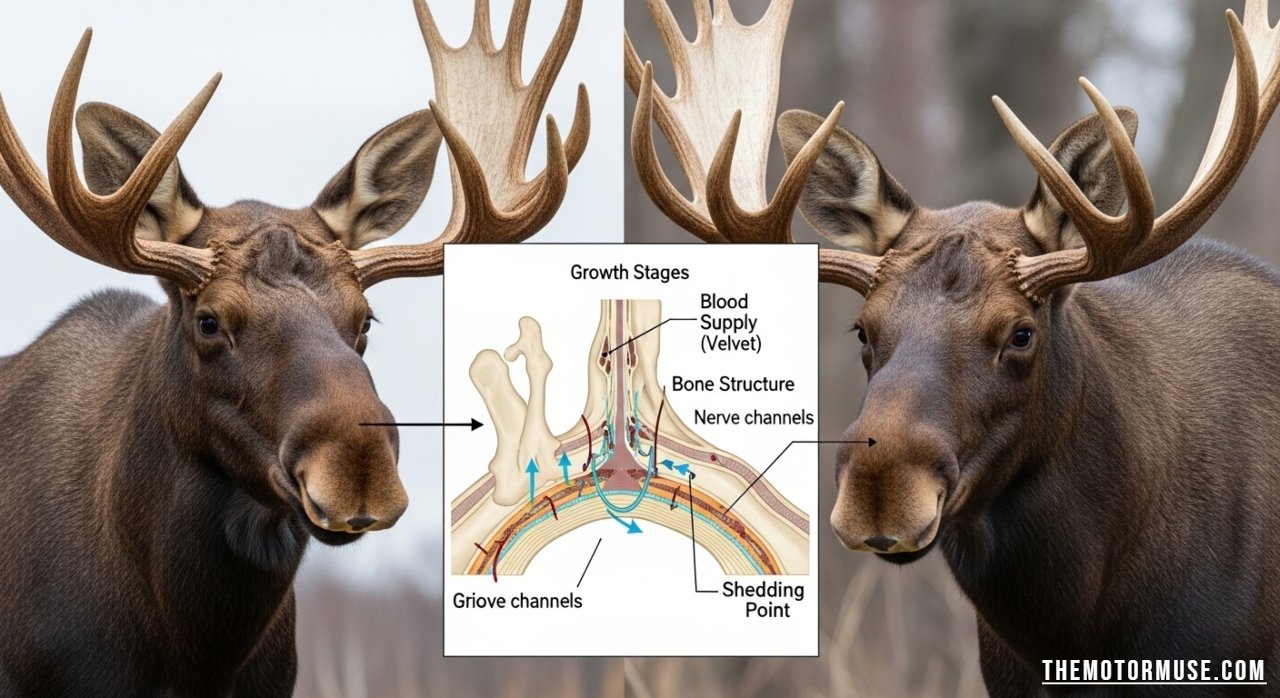
Moose antlers are among the most impressive features in the animal kingdom, symbolizing strength, dominance, and survival. These विशाल संरचनाएँ (massive structures) are not just for display—they serve critical roles in mating, defense, and species identification. Found primarily in male moose, antlers grow and shed annually, making them one of nature’s most fascinating renewable biological structures.
Understanding moose antlers offers insight into wildlife biology, seasonal adaptation, and the intricate balance of ecosystems. This article explores their growth cycle, purpose, structure, and significance in both nature and human culture.
What Are Moose Antlers?
Moose antlers are large, bony extensions that grow from the skulls of male moose. Unlike horns, which are permanent and made of keratin, antlers are temporary and composed of bone. They are shed and regrown each year, often growing larger with age and health.
These antlers can span over six feet from tip to tip and weigh up to 30 kilograms, making them the largest antlers of any living deer species. Their broad, flattened shape—often referred to as “palmate”—distinguishes them from the branching antlers of other deer.
The Growth Cycle
Spring: Rapid Growth Begins
The growth of moose antlers begins in early spring when daylight increases and hormones stimulate development. Covered in a soft, nutrient-rich layer called velvet, the antlers grow at an astonishing rate—sometimes up to an inch per day.
The velvet supplies blood and oxygen, supporting rapid bone formation. During this phase, the antlers are sensitive and easily damaged.
Summer: Full Development
By mid to late summer, moose antlers reach their full size. The velvet begins to dry and shed, revealing the hardened bone underneath. Moose often rub their antlers against trees to remove the remaining velvet.
Autumn: Mating Season Use
In autumn, during the rut (mating season), moose antlers play a crucial role. Males use them to compete for females, engaging in displays of strength or physical combat with rivals.
Winter: Shedding Phase
After the mating season, testosterone levels drop, causing the antlers to loosen and eventually fall off. This usually occurs in late fall or early winter, allowing the cycle to begin again the following year.
Functions of Moose Antlers
Mating and Dominance
One of the primary purposes of moose antlers is to establish dominance during the breeding season. Larger antlers often indicate a stronger, healthier male, increasing his chances of attracting a mate.
Defense Mechanism
Although primarily used for mating competition, moose antlers can also serve as a defense tool against predators like wolves or bears.
Visual Communication
Antlers help moose communicate visually. Their size and shape can signal age, strength, and genetic fitness to other moose, reducing the need for physical conflict.
Structure and Composition
Moose antlers are made of dense bone tissue and are among the fastest-growing animal organs. Their structure includes:
- Main Beam: The central structure from which other parts extend
- Palm: The flattened, broad section unique to moose
- Tines: The pointed projections along the edges
This complex structure allows for both strength and display, making them effective tools in both combat and attraction.
Factors Affecting Antler Growth
Nutrition
A moose’s diet plays a major role in antler development. Access to nutrient-rich vegetation, especially calcium and phosphorus, leads to larger and stronger antlers.
Age
Younger moose grow smaller antlers, while mature males (typically 5–10 years old) develop the largest and most impressive ones.
Genetics
Genetic traits influence the size, shape, and symmetry of moose antlers. Some moose naturally grow wider or more branched antlers than others.
Environmental Conditions
Climate, habitat quality, and seasonal changes can impact growth. Harsh winters or limited food supply may result in smaller antlers.
Differences Between Antlers and Horns
It is important to distinguish between antlers and horns:
- Antlers are shed annually; horns are permanent
- Antlers are made of bone; horns consist of keratin
- Antlers grow in branches; horns are typically unbranched
This distinction highlights the unique nature of moose antlers in the animal kingdom.
Ecological Importance
Nutrient Recycling
When moose shed their antlers, they become a source of nutrients for other animals. Rodents and small mammals often gnaw on them for minerals.
Habitat Interaction
Moose use their antlers to break branches and clear vegetation, indirectly shaping their environment and supporting ecosystem diversity.
Cultural and Symbolic Significance
Moose antlers have long held cultural importance in various societies. Indigenous communities have used them for tools, carvings, and ceremonial purposes. They are often seen as symbols of strength, resilience, and connection to nature.
In modern times, they are also used in decorative art, furniture design, and rustic architecture, reflecting their enduring appeal.
Conservation and Ethical Considerations
While moose populations are generally stable in many regions, environmental changes and human activities can pose threats. Responsible wildlife management ensures that moose and their habitats are protected.
Collecting shed antlers is often permitted in many areas, but hunting regulations strictly control the harvesting of moose to maintain ecological balance.
Interesting Facts
- Moose antlers are the fastest-growing bones in the animal kingdom
- A large set can weigh more than the entire skeleton of some animals
- Each year’s growth can differ in shape and size
- Antlers are completely regrown from scratch annually
Tips for Observing Moose Antlers in the Wild
Maintain Distance
Moose are large and potentially dangerous animals. Always observe from a safe distance.
Visit During the Right Season
Late summer and early autumn are the best times to see fully developed antlers.
Use Binoculars
This allows for a closer look without disturbing the animal.
Respect Wildlife
Avoid interfering with natural behavior, especially during the mating season.
Future Research and Interest
Scientists continue to study moose antlers to understand rapid bone growth and regeneration. This research has potential applications in medicine, particularly in bone healing and regenerative science.
As interest in wildlife conservation grows, moose antlers remain a subject of fascination for researchers, nature enthusiasts, and photographers alike.
Conclusion
Moose antlers are more than just a striking physical feature—they are a testament to nature’s complexity and adaptability. From their rapid growth cycle to their role in survival and reproduction, they represent a perfect blend of biology and beauty.
By studying and appreciating moose antlers, we gain a deeper understanding of wildlife and the ecosystems that support it. Protecting these majestic animals ensures that future generations can continue to marvel at one of nature’s most extraordinary creations.