
Health
What is Echolalia? A Look into Repetitive Language and How to Support It

Understanding Echolalia
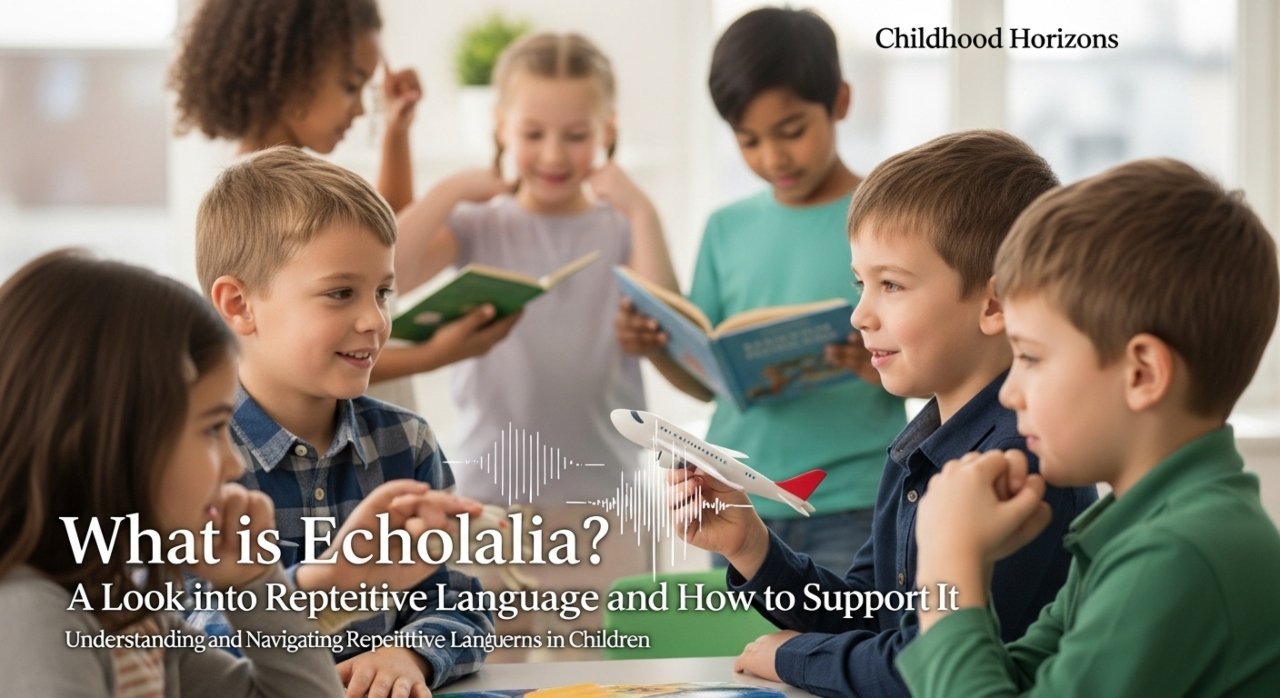
Echolalia is a phenomenon in which individuals repeat words, phrases, or sentences they have heard. While it is often observed in children during typical language development, it can also be a feature of neurodevelopmental conditions such as autism spectrum disorder (ASD), certain speech and language disorders, and other cognitive differences. Understanding echolalia, its types, and how to support individuals exhibiting this behavior is crucial for caregivers, educators, and therapists alike. Echolalia is derived from the Greek words “echo” meaning “repeat” and “lalia” meaning “speech.” Essentially, it is the repetition of verbal expressions. In many cases, echolalia serves as a natural step in language development. Children may repeat words or phrases spoken by adults, family members, or peers as they try to learn vocabulary, grammar, and conversational norms. For example, a toddler might repeat a line from a favorite cartoon or mimic an adult’s phrase without fully understanding its meaning. In these scenarios, echolalia can be a positive indicator of emerging language skills. However, in individuals with neurodevelopmental differences, echolalia may persist beyond the typical age range, presenting in more structured and repetitive patterns. For instance, a person with autism may repeat questions asked by others or recite scripted phrases from movies. These repetitions can occur immediately after hearing the phrase, known as immediate echolalia, or after a delay, called delayed echolalia.
Types of Echolalia
Understanding the type of echolalia is essential for creating effective intervention strategies. Broadly, echolalia can be classified into two categories. Immediate echolalia occurs when an individual repeats something they have just heard. For instance, if someone asks, “Do you want water?” the individual might respond by repeating, “Do you want water?” instead of providing an independent answer. Immediate echolalia can function as a bridge to communication, helping the individual process the question or statement before generating a response. Delayed echolalia involves repeating words, phrases, or sentences after a time delay. These repetitions might occur hours, days, or even weeks after initially hearing the phrase. Delayed echolalia often involves phrases from television shows, songs, or past conversations. While this form of echolalia may seem less functional at first glance, it can serve as a way for the individual to express needs, emotions, or social understanding.
Why Echolalia Occurs
Echolalia can serve multiple purposes depending on the context and individual. Some of the key reasons include communication, processing language, self-regulation, and social interaction. Echolalia can be a means of expressing needs or desires when independent speech is challenging. For example, repeating “I want cookie” may signal a real desire for a snack. Repetition can help individuals process and understand language. By echoing phrases, they practice pronunciation, syntax, and meaning. Echolalia may act as a coping mechanism in stressful or overwhelming situations. Repeating familiar phrases can provide comfort and predictability. Some individuals use echolalia to initiate or maintain social interaction. Even if the repeated phrase does not directly answer a question, it can be a way to engage with others. Recognizing the purpose behind echolalia is critical. Rather than attempting to suppress it outright, caregivers and professionals are encouraged to observe and interpret its function.
Supporting Individuals with Echolalia
Supporting someone who exhibits echolalia involves a combination of patience, structured interventions, and individualized strategies. Working with a certified ABA therapist is often highly beneficial, as Applied Behavior Analysis (ABA) provides evidence-based approaches to enhance communication and reduce frustration associated with repetitive language. Functional Communication Training (FCT) is an evidence-based approach that helps individuals replace echolalic responses with functional and socially appropriate language. For example, if a child repeatedly says, “Do you want water?” when thirsty, a therapist can teach them to respond with “I want water” instead. By identifying the function of the echolalic behavior, FCT provides alternative ways to meet the individual’s communication needs. Modeling involves demonstrating the language or response that is desired. This method is particularly effective for children with immediate echolalia. By consistently providing correct and contextually relevant language, caregivers and therapists create a template for the individual to imitate. Over time, this repetition helps build expressive language skills. Language expansion is a technique where a certified ABA therapist takes the individual’s repeated phrase and expands it to create a more complete or contextually accurate sentence. For instance, if a child repeats “Want cookie,” the therapist might respond with, “Yes, you want a chocolate chip cookie.” This method gradually teaches more complex language structures while respecting the child’s current abilities. Visual supports, such as picture cards, schedules, or written words, can assist individuals who rely on echolalia to communicate. Visual cues provide additional context and reduce reliance on repetition. For example, a picture of a glass of water paired with the phrase “I want water” encourages independent language while supporting comprehension. Positive reinforcement plays a significant role in encouraging functional communication. When an individual uses a phrase appropriately rather than echoing, caregivers and therapists should provide praise, tangible rewards, or other forms of reinforcement. Over time, this reinforces functional language while gradually reducing echolalic repetitions.
Common Misconceptions About Echolalia
Despite being widely observed, echolalia is often misunderstood. Some common misconceptions include that echolalia is meaningless, that it indicates poor intelligence, or that it should be eliminated. While echolalia may appear repetitive, it often has functional or communicative purposes, such as expressing needs or emotions. Individuals using echolalia may have normal or above-average cognitive abilities, and it reflects a different communication style rather than a limitation. Suppressing echolalia without understanding its purpose can increase frustration and reduce motivation to communicate. Supportive strategies aim to shape echolalic speech into functional language rather than eliminating it altogether.
The Role of a Certified ABA Therapist
A certified ABA therapist plays a critical role in assessing echolalia and creating individualized interventions. ABA therapy uses structured techniques to understand the triggers, functions, and contexts of repetitive language. By analyzing these factors, therapists can identify whether echolalia serves a communicative, self-regulatory, or social function, design personalized strategies to promote independent speech, track progress and adjust interventions based on observable outcomes, and train caregivers and educators to implement consistent language supports across environments. Because echolalia varies widely in form and function, guidance from a certified ABA therapist ensures interventions are tailored to the unique needs of each individual.
Practical Tips for Caregivers and Educators
Caregivers and educators can support individuals with echolalia in several practical ways. Observing and interpreting when and why echolalia occurs is essential to understand whether it is a request, a response to stress, or a form of engagement. Using clear and simple language helps avoid overwhelming the individual, which may increase echolalic repetition. Providing choices encourages individuals to communicate their preferences, reducing reliance on echolalia for expressing needs. Encouraging turn-taking in structured social interactions can teach appropriate timing for responses. Collaborating with professionals ensures strategies are effective and consistent across home, school, and community settings. Partnering with a certified ABA therapist offers structured guidance and ongoing support to implement these strategies successfully.
The Long-Term Outlook
With appropriate support, echolalia can be channeled into meaningful communication. Many individuals eventually develop more independent speech and language skills. Some may continue to use echolalic phrases throughout life, but with proper interventions, these repetitions often decrease in frequency and increase in functionality. Research indicates that early intervention, particularly when guided by evidence-based methods such as ABA, significantly improves communication outcomes. Understanding the individual’s needs, maintaining patience, and employing structured strategies are key components of successful support.
Conclusion
Echolalia is more than mere repetition; it is a window into the communication style, cognitive processing, and emotional world of an individual. While it can present challenges, it also offers opportunities for growth and connection. By understanding the different types of echolalia, recognizing its functions, and implementing targeted strategies, caregivers and professionals can support meaningful communication. Working with a certified ABA therapist provides structured guidance, personalized interventions, and ongoing support, making it possible to transform echolalia into a tool for self-expression rather than a barrier. Through patience, observation, and evidence-based practices, individuals exhibiting echolalia can achieve significant progress in language development and social engagement. By embracing echolalia as a natural form of communication and partnering with trained professionals, families and educators can empower individuals to communicate more effectively and confidently, turning repeated words into pathways for growth, learning, and connection.



What is Echolalia? A Look into Repetitive Language and How to Support It

Restore Your Home’s Curb Appeal Instantly with Professional House Washing That Removes Dirt, Mold, Mildew, and Weather Stains

Step-by-Step Process of Designing and Installing Custom Windows

Subaru WRX STI discontinued … till further notice
What could have been: The incredible experimental engines that time forgot
