Work
Audit-Ready and Always-On: How to Build Compliance Into Your Daily Workflow

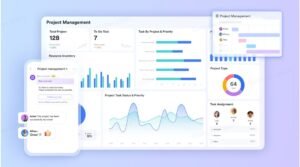
Most companies treat compliance as a periodic exercise. A review comes up, someone assembles the evidence, and the team spends two weeks reconstructing a paper trail that should have been building itself all along. The cost of that reconstruction is not just the two weeks. It is the distraction from normal operations, the risk of gaps in the record, and the slow realization that the process that generated the work and the process that documents it have been running in parallel rather than as a single system. The organizations that sail through audits are not the ones with better compliance teams. They are the ones that built compliance into their daily workflow from the start, using project management tools that generate audit-ready records as a natural byproduct of normal operations.
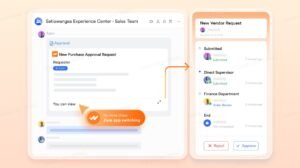
Building an approval trail that documents itself with Lark Approval
Every approval in Lark Approval generates a permanent, timestamped record of who submitted the request, who reviewed it, what decision was made, and when. Teams never need to build a separate compliance log because the log builds itself with every transaction.
-
“Conditional Branches” ensure that requests meeting defined criteria, such as budget thresholds or risk flags, automatically route to the appropriate authority level without manual intervention, so every escalation is documented rather than handled informally.
-
“Parallel Routing” keeps multiple reviewers working simultaneously, reducing the time between submission and decision while maintaining the full multi-stakeholder record that compliance frameworks typically require.
-
Approval outcomes are pushed directly into Messenger so that the operational team is notified the moment a decision is reached, removing the gap between governance and execution that typically requires a second communication step.
-
The complete approval history for any request is searchable and retrievable at any time, so when an auditor asks for evidence of a specific authorization, the answer is available in seconds rather than reconstructed over days.
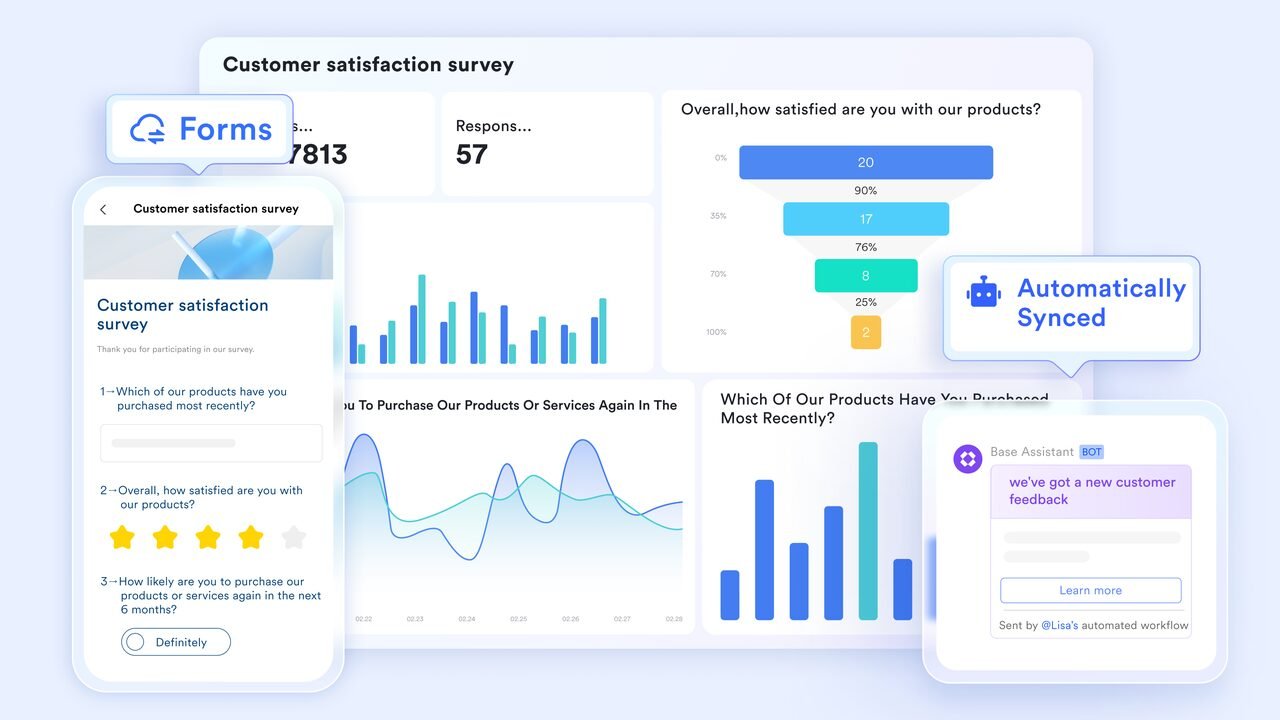
Replacing unstructured intake with traceable records with Lark Forms
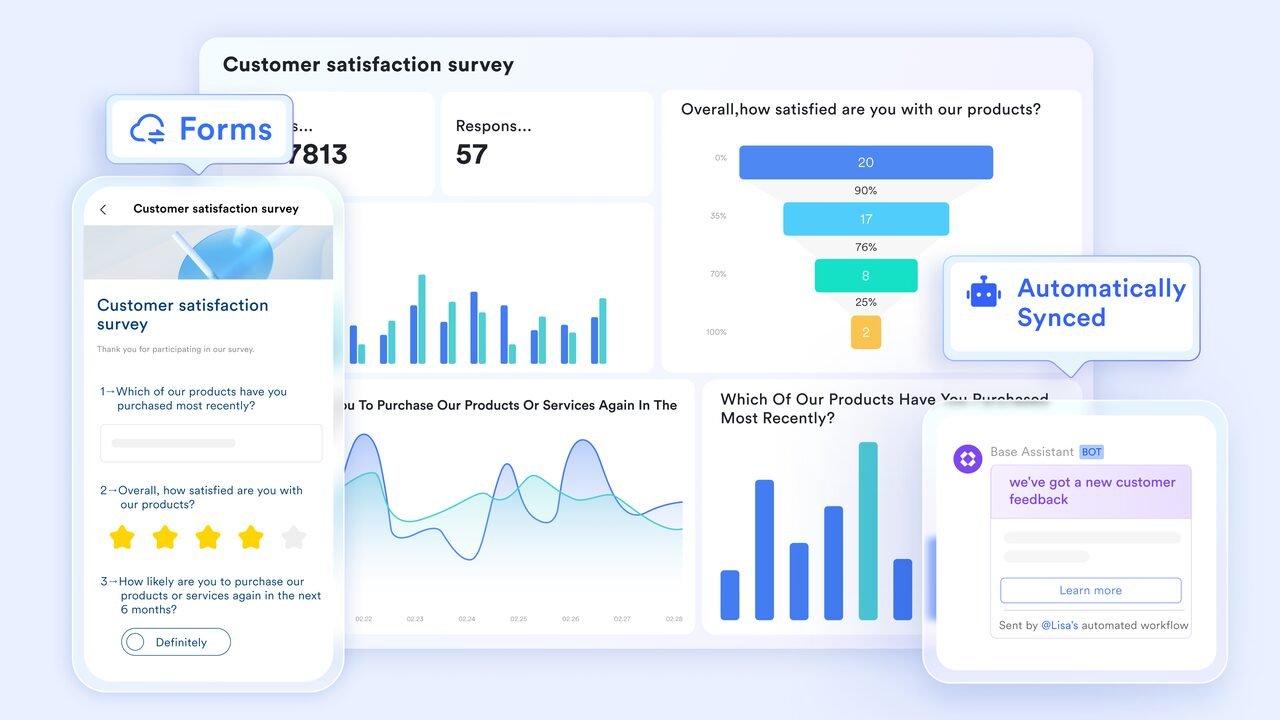
Unstructured request intake is one of the most common sources of compliance gaps. When requests arrive by email, chat, or verbal conversation, there is no automatic record of what was asked for, when, by whom, or on what basis it was approved. Lark Forms replaces that ambiguity with a structured intake layer that generates a complete record from the first interaction.
-
Every form submission is timestamped and attributed to the submitter automatically, creating a permanent intake record without any additional documentation effort from the receiving team.
-
Conditional logic ensures that compliance-relevant fields, such as justification statements, budget codes, or risk disclosures, appear whenever a request triggers a defined threshold, so the record is always complete regardless of whether the submitter remembered to include the relevant detail.
-
All submissions map directly into a Lark Base table, making the full intake history searchable, filterable, and exportable in the format required by any audit or reporting process.
-
External parties can submit forms via a shared link without a Lark account, so the structured intake record extends to vendor submissions, contractor requests, and customer-facing processes without requiring every party to be onboarded to the platform.
Keeping operational data clean and auditable with Lark Base
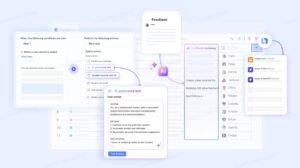
Operational databases that live in shared spreadsheets are difficult to audit because they have no edit history, no access log, and no way to trace who changed what and when. Lark Base replaces the shared spreadsheet with a structured relational database that maintains a complete operational record by design.
-
Every change to a Base record is logged with the editor’s identity and a timestamp, so the full edit history of any operational record is always available without requiring a manual audit trail to be maintained alongside the working data.
-
Permission controls define exactly who can view, edit, and export each table or field, so access is governed at the data level and the record of who had access to what is built into the platform’s architecture rather than managed through a separate access log.
-
Automated notifications on status changes ensure that the right people are informed at each stage of a workflow without any step being handled informally outside the system, keeping the entire process within the documented operational record.
-
Shared dashboards give compliance officers a live view of operational metrics without requiring the operational team to produce a separate report, removing the version discrepancy that often creates inconsistencies between what the team is doing and what the compliance record shows.
Making policy documentation easy to find and verify with Lark Wiki
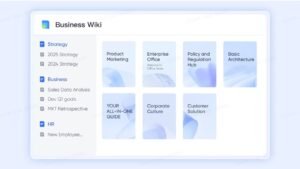
Compliance frameworks depend on policies being accessible, current, and demonstrably communicated to the relevant people. When policies live in email attachments and personal drives, none of those conditions are reliably met. Lark Wiki gives organizations a structured, permission-controlled home for every policy, procedure, and regulatory document in the organization.
-
“Permission Settings” allow compliance officers to control who can view, edit, copy, and export each policy document at the user and department level, so sensitive regulatory content is protected while broadly applicable policies remain accessible to everyone who needs them.
-
“Advanced Search” with powerful filters lets team members locate any specific policy or procedure in seconds, removing the “I didn’t know that policy existed” defense that frequently complicates compliance reviews.
-
The “Migration” feature allows existing compliance documentation from Confluence, Word, or other legacy systems to be brought into the Wiki without manual recreation, so the transition to a structured knowledge base does not require starting the documentation library from scratch.
-
Every Wiki page carries a full edit history, so compliance officers can verify when a policy was last updated, who changed it, and what the previous version said without requesting a document history from whoever owns the file.
Creating a recoverable record of every decision with Lark Docs
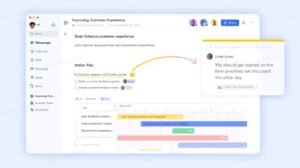
Decisions made in meetings, in chat threads, or in verbal conversations are invisible to auditors unless they are documented. Lark Docs gives teams a low-friction way to capture decisions at the point they are made and keep those records searchable and attributable indefinitely.
-
“Version History” logs every edit with the editor’s name and timestamp, so the evolution of any decision document is fully traceable and the reasoning behind current policy can be reconstructed from the edit record rather than relying on someone’s memory.
-
“Comment” threads on specific document sections allow reviewers to raise questions, flag concerns, and receive responses within the document itself, creating an embedded review record that travels with the document rather than living in a separate email chain.
-
Real-time co-editing means that when multiple stakeholders need to sign off on a decision document simultaneously, the collaboration happens within a single version rather than across multiple drafts, keeping the documentary record clean and unambiguous.
-
Document templates ensure that every decision record produced across the organization follows a consistent structure, making it easier to locate and compare records during a compliance review without needing to interpret different formatting conventions.
Bonus: The hidden cost of compliance-by-reconstruction
When compliance teams benchmark their tooling, they typically start with Google Workspace pricing as a baseline and add specialist tools for document management, approval tracking, and audit logging on top. The result is a system where the compliance record and the operational record are maintained separately, and someone has to bridge them at review time.
The hidden cost is not the extra tools. It is the two weeks before every audit when the operations team stops doing operational work and starts building the documentary evidence that should already exist. Lark eliminates that cost by generating the compliance record inside the same tools the team uses every day. The approval trail, the intake log, the edit history, and the policy documentation all exist as a byproduct of normal operations, not as a separate compliance exercise.
Conclusion
Audit-readiness is not a state you achieve before a review. It is a property of the system you build. When compliance is embedded into the daily workflow through structured productivity tools that generate traceable records by default, the audit becomes a retrieval exercise rather than a reconstruction project. The team that built its operations on a documented foundation never has anything to fear from a review.


LifeStyle4 months ago
Crocolini Tiny Crocs With Big Charm

Blog4 months ago
Gessolini A Complete Guide to Origins and Facts

LifeStyle4 months ago
Simpciry Finding Clarity in a Noisy World
Others9 months ago
What could have been: The incredible experimental engines that time forgot

Others9 months ago
Subaru WRX STI discontinued … till further notice

Entertainment8 months ago