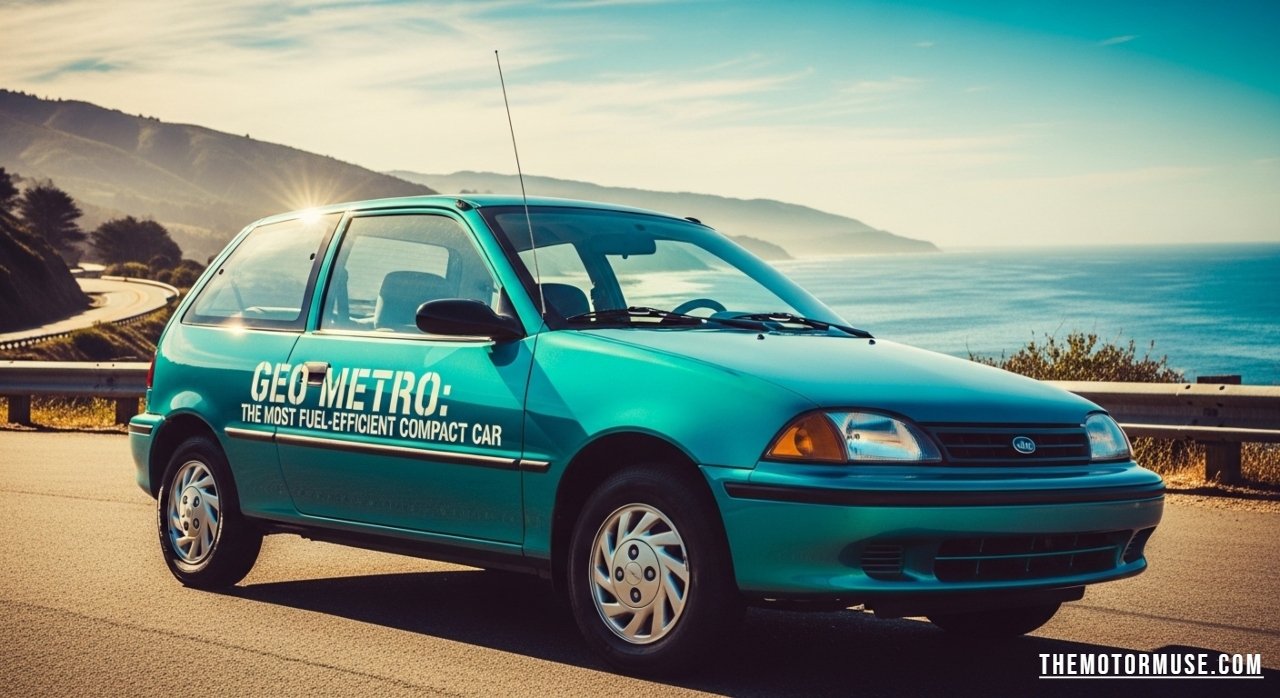
The geo metro is a compact economy car produced from 1989 to 2001 through a partnership between General Motors and Suzuki. Known for its lightweight design and small engines, it became famous for achieving extremely high fuel efficiency, often exceeding 40–50 miles per gallon. Affordable, reliable, and simple to maintain, the geo metro remains one of the most fuel-efficient gasoline cars ever sold in the United States and is still appreciated by enthusiasts for its practicality and economical design.
The geo metro is widely recognized as one of the most fuel-efficient compact cars ever produced in the United States. Introduced at the end of the 1980s, this small and economical vehicle quickly gained popularity among drivers who prioritized affordability, reliability, and exceptional fuel economy. During a time when rising fuel prices and environmental concerns were becoming more prominent, the geo metro offered a practical solution for everyday transportation.
Manufactured between 1989 and 2001, the vehicle was the result of a collaboration between General Motors and Suzuki. Its lightweight design, simple engineering, and highly efficient engine helped it achieve fuel economy numbers that many modern gasoline vehicles still struggle to match. Because of these qualities, the geo metro remains a notable example of efficient automotive design.
This article explores the history, development, design features, fuel efficiency, and long-lasting impact of the geo metro, helping readers understand why it continues to hold a special place in automotive history.
Origins and Development
The geo metro emerged during a period when car manufacturers were searching for ways to build smaller and more efficient vehicles. It was produced through a partnership between General Motors and Suzuki, combining American marketing with Japanese engineering expertise.
The car was largely based on the Suzuki Cultus platform, a compact vehicle already known for efficiency and practicality. By adapting this platform for the North American market, the companies created a vehicle that suited urban drivers and commuters looking for a cost-effective alternative to larger cars.
Production began in 1989 and continued until 2001. During this time, the geo metro went through several design updates and improvements. It was available in multiple body styles, including a two-door hatchback, four-door sedan, and a convertible model.
These variations allowed the vehicle to appeal to a wide range of drivers, from students and first-time car buyers to commuters seeking low fuel costs.
Design Philosophy
The success of the geo metro can largely be attributed to its straightforward design philosophy. Rather than focusing on luxury features or high performance, engineers prioritized efficiency, simplicity, and affordability.
One of the most important features was its lightweight construction. The car weighed significantly less than many other vehicles on the road at the time. Reduced weight meant the engine required less energy to move the car, which directly improved fuel economy.
Another key element was the aerodynamic shape. Although compact, the vehicle had a rounded profile that helped reduce air resistance. Lower drag helped the car maintain efficiency at highway speeds.
The compact dimensions also made the car ideal for urban environments. Drivers could easily park in tight spaces and navigate crowded streets. This design approach also contributed to lower manufacturing costs, which helped keep the vehicle affordable.
Read: Eagle VW: A Forgotten Chapter in Volkswagen History
Engine Options and Performance
While the geo metro was not designed as a high-performance vehicle, it offered reliable engines that emphasized efficiency and durability.
Many models came with a 1.0-liter three-cylinder engine. This engine produced modest horsepower but delivered excellent fuel economy. Because the car was lightweight, even a small engine provided enough power for daily commuting and city driving.
Later versions introduced a 1.3-liter four-cylinder engine. This option offered slightly improved performance while still maintaining strong fuel efficiency.
Drivers could choose between a manual transmission or an automatic transmission. Manual versions typically achieved better fuel economy because drivers had more control over gear shifting and engine speed.
Legendary Fuel Efficiency
One of the most famous characteristics of the geo metro is its remarkable fuel economy. Many models were capable of achieving extremely high miles-per-gallon ratings compared to typical vehicles of the era.
Some versions were rated at over 40 miles per gallon in city driving and more than 50 miles per gallon on highways. These figures made the car one of the most economical gasoline-powered vehicles available in the United States.
Several engineering factors helped achieve this efficiency. The engines were small and efficient, the vehicle body was lightweight, and the mechanical systems were simple and optimized for low fuel consumption.
Even today, these fuel economy numbers remain impressive for a conventional gasoline vehicle.
Interior and Practical Features
Despite its compact size, the geo metro offered a surprisingly practical interior. Designers focused on maximizing usable space while keeping the layout simple and functional.
The car typically accommodated four passengers. While rear seat space was limited compared to larger vehicles, it was adequate for short trips and everyday travel.
Hatchback versions offered flexible cargo space. Drivers could fold down the rear seats to expand storage capacity for groceries, luggage, or other items.
The dashboard layout was straightforward and easy to understand. Basic gauges, clear controls, and minimal distractions made the car simple and comfortable to operate.
Although the interior did not include many luxury features, it provided everything needed for reliable daily transportation.
Affordability and Ownership Costs
Another key factor behind the popularity of the geo metro was its affordability. The vehicle was designed to be one of the most budget-friendly cars available in its market segment.
When new, it was priced significantly lower than many competing models. This made it attractive to students, first-time buyers, and families looking for a practical second vehicle.
Fuel savings also played an important role in ownership costs. Because the car consumed very little gasoline, drivers could travel long distances while spending far less money on fuel.
Maintenance was also relatively inexpensive. The simple mechanical design meant fewer complex components, making repairs easier and more affordable compared to many modern vehicles.
Popularity in the 1990s
During the 1990s, the geo metro became a familiar sight on American roads. Its combination of low cost and excellent fuel economy made it particularly appealing to commuters and city drivers.
Many students and young professionals chose the vehicle because it provided reliable transportation at a price they could afford. Commuters appreciated its ability to travel long distances without frequent refueling.
The convertible version also gained attention because it offered an open-top driving experience at a much lower price than most other convertibles available during that time.
These qualities helped the car build a strong reputation as one of the most economical vehicles of its era.
Environmental Impact
Although the geo metro relied on a traditional gasoline engine, its high fuel efficiency meant it used far less fuel than many larger vehicles.
By consuming less gasoline per mile, it helped reduce overall emissions and fuel consumption. In this sense, the car represented an early step toward more environmentally responsible automotive design.
Long before hybrid and electric vehicles became widely available, the geo metro demonstrated that efficient engineering could significantly reduce fuel usage.
End of Production
Production of the geo metro ended in 2001 as automotive companies reorganized their brands and product lines. The Geo brand itself was eventually discontinued, and similar vehicles continued under different names within other divisions.
Although the car was no longer produced, its reputation for efficiency and practicality continued to influence discussions about economical vehicles.
Many of these cars remained on the road for years after production stopped, thanks to their simple design and durable components.
Legacy and Enthusiast Community
Even decades after production ended, the geo metro still attracts interest from car enthusiasts and efficiency advocates.
One of the main reasons is its impressive fuel economy, which remains notable even by modern standards. Few conventional gasoline vehicles have achieved similar mileage without hybrid technology.
Another factor is the car’s mechanical simplicity. Owners often find it easier to maintain compared to modern vehicles with advanced electronics and complex systems.
Enthusiasts frequently restore older models, share maintenance advice, and discuss fuel-saving techniques through online communities and automotive forums.
Lessons for Modern Automotive Design
The story of the geo metro offers several lessons that remain relevant to modern vehicle development.
First, efficiency can be achieved through thoughtful design rather than complex technology. Lightweight construction, small engines, and aerodynamic shapes can significantly improve fuel economy.
Second, affordability is an important factor for many consumers. Vehicles that balance cost, reliability, and efficiency often attract strong demand.
Finally, the history of this compact car illustrates how consumer preferences change over time. While compact economy cars once dominated certain markets, many buyers later shifted toward larger vehicles such as SUVs and crossovers.
Conclusion
The geo metro remains one of the most recognizable fuel-efficient compact cars ever sold in the United States. Its lightweight structure, small engines, and practical design allowed it to achieve fuel economy figures that were remarkable for its time.
Produced from 1989 to 2001 through a collaboration between major automotive manufacturers, the vehicle proved that simple engineering could deliver outstanding efficiency and reliability.
Even though the geo metro is no longer in production, its legacy continues to influence discussions about economical transportation. For many drivers and automotive enthusiasts, it stands as a lasting example of how thoughtful design can create one of the most fuel-efficient compact cars in automotive history.