
Land management
The Complete Guide to Forestry Mulching for Efficient and Sustainable Land Clearing

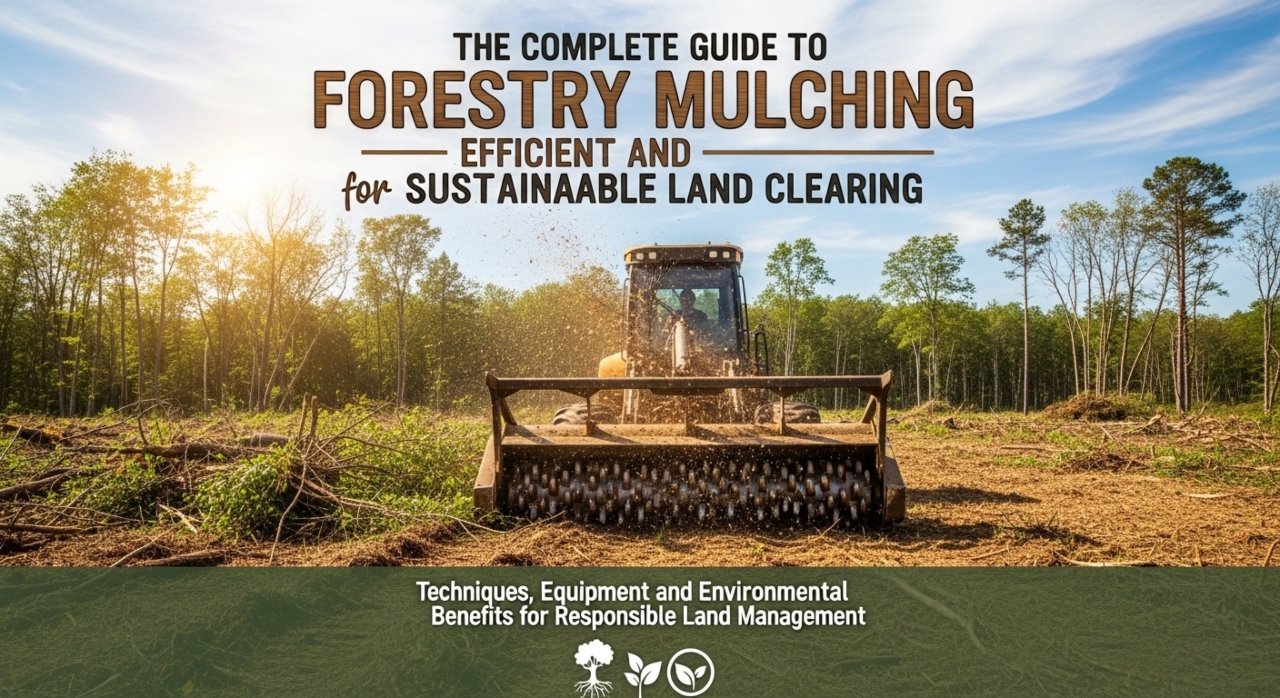
Managing overgrown land can be a challenging and time-consuming task. Whether the goal is preparing property for development, improving agricultural productivity, creating firebreaks, or restoring natural habitats, effective vegetation control is essential. Traditional land-clearing methods often involve multiple machines, debris hauling, burning, and significant soil disturbance. Today, modern solutions offer a more efficient and environmentally responsible alternative. Forestry Mulching has emerged as one of the most effective techniques for clearing and managing land while preserving soil health and minimizing environmental impact.
Property owners, developers, and land managers increasingly prefer advanced clearing methods that combine efficiency with sustainability. Understanding how this process works and its long-term benefits helps ensure informed decisions when planning land improvement projects.
What Is Forestry Mulching?
Forestry Mulching is a land-clearing process that uses specialized machinery to cut, grind, and shred trees, brush, and vegetation into fine mulch in a single operation. Unlike traditional methods that require cutting, piling, burning, and hauling debris, this approach processes vegetation directly on-site.
The equipment typically includes a powerful carrier machine fitted with a rotating drum or cutting head. As the machine moves across the property, it grinds unwanted vegetation into small wood chips and spreads the mulch evenly over the ground. This eliminates the need for additional cleanup and reduces overall project time.
Because the process leaves a protective layer of mulch behind, it supports soil stability and promotes natural nutrient recycling. The result is cleared land that remains environmentally balanced and ready for its intended use.
How the Process Works
The process begins with a thorough assessment of the land. Factors such as terrain, vegetation density, soil condition, and long-term goals are considered before work begins. Once planning is complete, the operator uses specialized equipment to systematically clear the designated area.
Trees and brush are cut at ground level and immediately processed into mulch. Larger trees can be handled efficiently depending on equipment capacity. The mulch is distributed evenly across the surface, forming a protective organic layer.
Unlike bulldozing, which uproots entire root systems, Forestry Mulching typically leaves roots intact. This helps prevent erosion and maintains soil structure. In some cases, additional treatments may be recommended to control regrowth or invasive species.
The streamlined nature of this process makes it one of the fastest and most efficient land-clearing solutions available.
Environmental Benefits
One of the primary reasons landowners choose Forestry Mulching is its environmentally friendly approach. Traditional clearing methods often disturb topsoil, leading to erosion and nutrient loss. Burning debris releases smoke and pollutants into the air. Hauling materials off-site increases fuel consumption and carbon emissions.
In contrast, mulching recycles vegetation into organic matter. The mulch layer helps retain soil moisture, regulate temperature, and reduce weed growth. As it decomposes, it enriches the soil with nutrients, supporting healthier plant growth in the future.
Because root systems remain largely undisturbed, soil stability is maintained. This is particularly important on sloped or erosion-prone properties. By minimizing ground disruption, this method preserves natural ecosystems and protects surrounding vegetation.
Cost-Effectiveness and Efficiency
Land clearing can be expensive, especially when multiple machines and labor crews are involved. Traditional methods may require separate equipment for cutting, loading, hauling, and grading. Each step increases project costs.
Forestry Mulching combines these steps into one efficient operation. Since debris is processed on-site, there is no need for hauling or disposal fees. Fewer machines mean reduced fuel consumption and lower labor costs.
Additionally, faster completion times allow property owners to move forward with development or agricultural use sooner. This efficiency translates into both financial savings and reduced downtime.
For many projects, mulching provides a cost-effective solution without compromising quality or environmental responsibility.
Applications Across Different Industries
The versatility of modern mulching techniques makes them suitable for a wide range of applications.
Property Development
Developers use mulching to prepare sites for construction. The process clears unwanted vegetation while preserving soil integrity, creating a stable foundation for grading and building.
Agriculture and Farming
Farmers often need to clear overgrown fields, remove invasive brush, or expand pasture areas. The mulch layer improves soil fertility and reduces weed competition, supporting agricultural productivity.
Utility and Infrastructure Maintenance
Utility companies require clear access to power lines, pipelines, and roadways. Efficient vegetation management ensures safety and accessibility without extensive environmental disruption.
Fire Prevention
Creating defensible space around properties helps reduce wildfire risk. Removing dense underbrush and small trees limits available fuel sources and slows potential fire spread.
Habitat Restoration
Conservation efforts often involve removing invasive species to encourage native plant growth. Controlled mulching allows selective clearing without damaging surrounding ecosystems.
These diverse applications highlight the adaptability of this method for both small-scale and large-scale projects.
Comparing Forestry Mulching to Traditional Clearing
Understanding the differences between mulching and conventional clearing helps illustrate its advantages.
Traditional bulldozing uproots trees and disturbs soil layers, often leaving uneven terrain. Large debris piles must be burned or transported away. This approach can increase erosion risks and damage natural habitats.
Burning vegetation may require permits and can create air quality concerns. Hauling debris involves additional equipment and labor, raising overall costs.
Forestry Mulching, on the other hand, processes vegetation directly into beneficial ground cover. There are no debris piles, no burning, and minimal soil disruption. The result is a cleaner, more sustainable outcome that aligns with modern environmental standards.
Soil Health and Erosion Control
Healthy soil is essential for long-term land productivity. Exposed soil is vulnerable to erosion caused by wind and water. The mulch layer created during clearing acts as a protective barrier.
This organic covering reduces runoff, stabilizes temperature fluctuations, and improves moisture retention. Over time, decomposing mulch enhances soil fertility and microbial activity.
For properties with slopes or erosion concerns, maintaining soil integrity is critical. Mulching provides effective erosion control while improving overall land quality.
Safety and Professional Expertise
Land clearing involves heavy machinery and potentially hazardous conditions. Working on uneven terrain or near structures requires skill and precision.
Professional operators undergo training to handle specialized equipment safely. Proper planning ensures that clearing is conducted efficiently while minimizing risks to workers and property.
Hiring experienced professionals ensures compliance with safety standards and industry best practices. Clear communication about project scope and expectations further enhances successful outcomes.
Long-Term Maintenance and Regrowth Management
Clearing land is not a one-time event for many properties. Vegetation may regrow over time, particularly in areas with favorable climate conditions.
Establishing a maintenance schedule helps preserve cleared areas. Periodic follow-up mulching may be recommended to control regrowth and maintain accessibility.
With consistent care, properties remain functional and visually appealing while preventing overgrowth from returning.
Enhancing Property Value
Well-maintained land significantly improves property appeal. Cleared and accessible acreage attracts buyers, investors, and developers.
Proper vegetation management demonstrates responsible ownership and proactive maintenance. Properties that require minimal additional preparation are often more marketable.
Investing in efficient clearing methods can increase both usability and long-term value.
Sustainability and Responsible Land Management
Sustainability plays an increasingly important role in land development decisions. Techniques that prioritize minimal environmental disruption align with responsible stewardship practices.
Forestry Mulching supports sustainable land management by recycling vegetation into natural ground cover. This approach reduces waste, lowers emissions, and enhances ecosystem balance.
By combining efficiency with environmental responsibility, mulching offers a modern solution that meets both economic and ecological goals.
Choosing the Right Service Provider
Selecting a qualified contractor is essential for achieving desired results. Property owners should verify experience, insurance coverage, equipment quality, and project history before hiring a provider.
Reviewing previous work and requesting detailed project explanations ensures clarity and confidence. A knowledgeable professional can assess site conditions and recommend the most effective approach.
Transparent communication regarding pricing, timelines, and expected outcomes builds trust and ensures project success.
The Future of Land Clearing Technology
Advancements in machinery continue to improve precision, fuel efficiency, and safety. Modern equipment allows operators to handle complex terrain and dense vegetation more effectively than ever before.
As demand for environmentally responsible solutions grows, mulching techniques are expected to remain at the forefront of land management innovation. Property owners increasingly recognize the value of sustainable practices that preserve soil health and reduce environmental impact.
Conclusion
Effective land clearing requires a balance between efficiency, cost control, and environmental responsibility. Modern methods have transformed the way property owners approach vegetation management, offering streamlined solutions that minimize disruption and maximize long-term benefits.
Forestry mulching provides a comprehensive approach by combining cutting, grinding, and debris management into a single operation. Its ability to protect soil health, reduce erosion, and eliminate the need for burning or hauling makes it a preferred choice across multiple industries.
By investing in professional Forestry Mulching services, landowners can achieve cleaner, safer, and more sustainable results while enhancing property value and usability. With proper planning and expert execution, this innovative method supports responsible land stewardship and long-term productivity.



Detailed Mold Inspection Reports for Property Buyers, Sellers, and Homeowners

The Ultimate Guide to Hardwood Floor Installation for a Durable and Elegant Space

Mercedes-Benz GLE Coupe: Luxury SUV Features & Review

Subaru WRX STI discontinued … till further notice
What could have been: The incredible experimental engines that time forgot
