
Blog
Trinitite: Rare Glass from Atomic Bomb Test Sites Explained

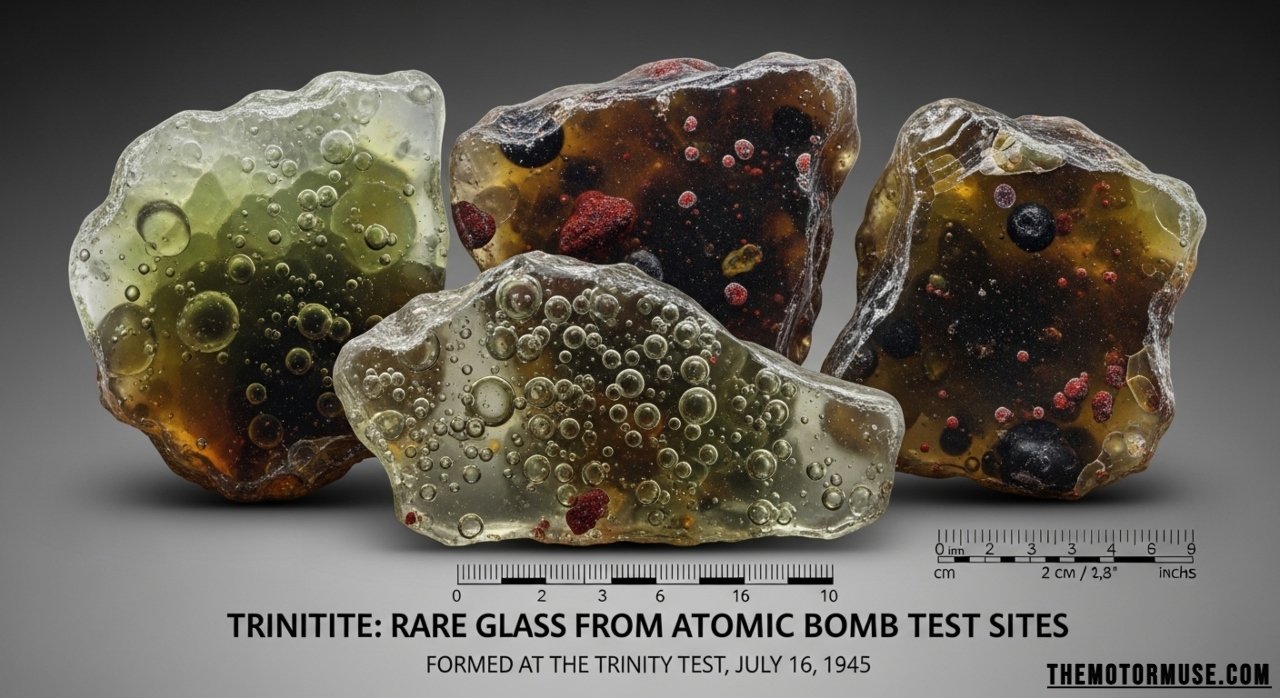
Trinitite is not just a relic of history; it’s a captivating piece of science and art that emerged from one of humanity’s most significant events. Formed during the first atomic bomb test at Trinity Site in 1945, this rare glass captures the explosive power of nuclear energy in its very structure. With its unique greenish hue and intriguing properties, Trinitite offers insights into both our past and future. In this post, we will explore the fascinating formation, composition, variations, and cultural impact of Trinitite while diving into its role in nuclear forensics. Join us on an illuminating journey through time as we unravel the mysteries behind this extraordinary material.
Trinitite is a striking glass formed from the intense heat and energy of the first atomic bomb explosion. When the bomb detonated in July 1945, sand and soil melted together, creating this unique substance. Its vibrant green color varies depending on its composition and formation conditions.
This rare material can be found at Trinity Site, where remnants of history meet natural wonder. Collectors and scientists alike are drawn to Trinitite for its beauty and significance, making it a fascinating piece of our nuclear legacy that sparks curiosity about both science and history.
Contents
Trinitite is a fascinating subject, rich with scientific and historical significance. This article delves into its formation, composition, and variations to shed light on this unique glass created during atomic bomb tests.
We’ll explore the implications of Trinitite in nuclear forensics and its cultural impact. Additionally, we’ll look at similar materials that share origins or properties with Trinitite. Recent advances in nuclear forensic chemistry will also be discussed, along with insights into mineralogy and petrology related to postdetonation debris for attribution purposes.
Formation
Trinitite forms from the intense heat generated during an atomic explosion. When a nuclear bomb detonates, temperatures can soar above 1,200 degrees Celsius. This extreme heat melts the surrounding sand and soil at ground zero.
As the molten material cools rapidly, it solidifies into glassy fragments known as Trinitite. The unique conditions of each blast result in variations in texture and color. These characteristics offer clues about the specifics of each detonation event, making Trinitite not only a fascinating geological artifact but also a historical record of nuclear testing.
Composition
Trinitite primarily consists of silica, the main component found in sand. This unique glass-like substance also contains aluminum, iron, and calcium oxides. The extreme heat from the atomic explosion melted these elements together.
The varying proportions of these minerals contribute to Trinitite’s diverse colors and textures. Green is the most common hue, but shades can range from yellowish to reddish-brown depending on other materials present during its formation. Each piece tells a silent story of its origin within an extraordinary moment in history.
Variations
Trinitite exhibits a fascinating array of variations, shaped by the conditions during its formation. Its colors can range from bright green to deep black, depending on factors like temperature and the type of material involved in the explosion. Each piece tells a unique story.
The texture also varies widely; some pieces are smooth and glassy while others may be rough or even crystalline. These differences not only enhance Trinitite’s aesthetic appeal but also provide valuable insights into the specific dynamics of each atomic bomb test site. Collectors often seek out these distinctive traits.
Nuclear Forensics
Nuclear forensics plays a crucial role in understanding the origins and characteristics of nuclear materials, including Trinitite. This specialized field involves analyzing radioactive debris to trace back its source and composition. Scientists use advanced techniques to identify isotopes and other signatures unique to bomb tests.
By studying Trinitite, researchers can gain insights into past atomic detonations. They often focus on detecting contaminants or radionuclides that formed during explosions. This information is vital not only for historical research but also for monitoring potential nuclear threats today.
Cultural Impact
Trinitite, born from the first atomic bomb detonation at Alamogordo, New Mexico, has left an indelible mark on popular culture. Artists, writers, and filmmakers have drawn inspiration from its mysterious origins. Its striking green hue evokes a blend of beauty and dread that captivates imaginations.
Moreover, Trinitite serves as a poignant reminder of the nuclear age’s complexities. Museums showcase it as both a scientific artifact and a symbol of humanity’s capacity for destruction. This duality continues to fuel discussions about peace and responsibility in our ever-evolving world.
Similar Materials
Trinitite isn’t the only fascinating material born from extreme heat and pressure. Obsidian, a volcanic glass formed from rapidly cooled lava, shares some similarities in texture and appearance. Both materials exhibit a glossy finish that captures light beautifully.
Another intriguing counterpart is fulgurite, created when lightning strikes sand or soil. This natural glass forms unique shapes as it fuses silica particles together. Each of these materials showcases nature’s ability to transform ordinary substances into extraordinary objects under intense conditions, much like Trinitite did during its formation at ground zero of atomic detonations.
Investigating Incorporation and Distribution of Radionuclides in Trinitite
Trinitite, the glassy residue formed from nuclear detonations, contains radionuclides resulting from fission and activation processes. Scientists investigate how these radioactive elements are incorporated into the material during explosions. This research provides insights into the conditions of detonation and the chemical reactions that occur in extreme environments.
The distribution of radionuclides within Trinitite can reveal vital information about blast dynamics. By studying patterns and concentrations, researchers can trace back to specific events and gain a deeper understanding of the nuclear phenomena at play during atomic tests.
Recent Advances in Nuclear Forensic Chemistry
Recent advances in nuclear forensic chemistry have significantly enhanced our understanding of materials like Trinitite. Researchers are now using advanced techniques such as isotopic analysis and mass spectrometry to analyze samples with remarkable precision. This allows them to identify the origins and compositions of nuclear material more effectively.
These innovations facilitate better attribution studies, helping scientists track the movement of radionuclides through various environments. The insights gained from these analyses not only deepen our knowledge about past events but also aid in current security measures regarding nuclear proliferation and environmental safety.
Trinitite Redux: Mineralogy and Petrology
Trinitite showcases a fascinating blend of mineralogical and petrological characteristics. Formed from the intense heat generated by nuclear explosions, it primarily consists of silica glass with varying impurities. This unique composition results in an array of colors, ranging from green to brown.
Researchers are captivated by its crystalline structures that emerge post-explosion. These formations can provide insights into the temperature and pressure conditions during detonation. Understanding Trinitite’s mineralogy helps scientists unravel not just its origins but also the broader implications for geological processes surrounding atomic events.
Postdetonation Nuclear Debris for Attribution
Postdetonation nuclear debris, including Trinitite, plays a critical role in nuclear forensics. By examining this unique glassy material, scientists can trace the origins and types of atomic events. Each sample holds clues about blast conditions and radioactive isotopes present during detonation.
The analysis of Trinitite helps establish attribution for past nuclear tests. This is essential not just for historical context but also for ensuring global security today. Understanding where these materials are found informs current non-proliferation efforts and aids in monitoring compliance with international treaties.
As forensic techniques evolve, the significance of Trinitite continues to grow within scientific communities. Its applications extend beyond mere study; they influence policy decisions that could impact future generations worldwide. The legacy of this rare material offers insights into both our past and our potential future regarding nuclear energy and weaponry.



Trinitite: Rare Glass from Atomic Bomb Test Sites Explained

Tucker Automobile: Classic Car History & Innovations

Ortolan: Complete Guide to the Rare and Exquisite Bird

Subaru WRX STI discontinued … till further notice
What could have been: The incredible experimental engines that time forgot
